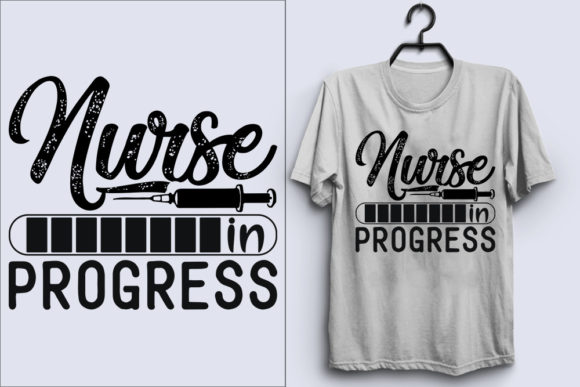
Evaluating the Nurse in Progress Embroidery Design
As a designer who works with embroidery files daily, I always approach a new graphic with a practical eye. I’m not just looking at a picture on a screen; I’m visualizing how it will translate into stitches, how it will sit on a fabric, and ultimately, how it will connect with a person. The Nurse in Progress design immediately caught my attention, and I wanted to walk through my thoughts on how this graphic performs for real project use.
The Warm, Encouraging First Impression
The design has a clear, friendly personality. It’s not a stern or purely symbolic medical icon; it’s an encouraging, almost celebratory statement. “Nurse in Progress” carries a sense of journey and achievement. For embroidery, this mood is perfect. It creates a piece that feels personal and supportive, rather than just decorative. The layout is balanced, with the text integrated as a core element of the graphic. This isn’t a tiny, intricate illustration; it’s a statement piece with enough visual weight to stand alone on a garment or gift. My first thought was that this belongs on something meaningful—a gift for a nursing student, a uniform accessory, or a piece of decor for someone’s workspace.
A Natural Fit for Personalized Gifts and Apparel
Let’s picture a real scenario. Imagine you’re creating a custom embroidered sweatshirt for a friend who’s just passed her latest exams. You want it to feel special, a keepsake. This design, stitched in a soft grey or blue thread on a heather grey sweatshirt, would look thoughtful and professional. The clean lines of the provided SVG and EPS files suggest it will stitch out with clarity. On a tote bag for carrying textbooks, it would add a touch of personalized pride. For a boutique selling to healthcare students or professionals, this could become a core piece of merchandise—embroidered on aprons, pillow covers for dorm rooms, or even kitchen towels for a fun, uplifting kitchen gift.
For a craft business, the design’s theme offers strong giftability. It’s easily recognizable and speaks directly to a specific, appreciative audience. This isn’t a generic graphic; it has a built-in story. That directly affects customer engagement and the perceived value of a handmade product. When someone buys an embroidered cap with this design, they’re buying a symbol of support, not just a hat.
Considering the Stitching Environment
In practical embroidery, a design’s success depends on where you put it. The Nurse in Progress design, with its combined text and graphic element, requires some planning. I would not automatically run this on a very small hoop size. The detail level needs space to breathe so the lettering remains crisp and the graphic doesn’t become overly dense. Testing it first on scrap fabric is essential—you’d want to check the stitch density, especially in any filled areas, to ensure it doesn’t pucker on lighter fabrics like t-shirts.
Texture and color contrast are key. On a dark fabric like a navy cap, you’d need to plan thread colors for maximum visibility—a bright white or a light silver thread could work beautifully. On textured fabrics like a sweater, a good stabilizer is non-negotiable to maintain the design’s clean edges. This is likely not an applique design by default, so the satin stitches and fill stitches (if present) need a stable foundation.
Where to Use With Extra Care
Some applications demand a second look. Stretchy fabric, for instance, requires careful hoop tension and stabilizer choice to keep the design from distorting. If you’re considering it for something like baby clothes, scale it appropriately and ensure the stitch density is soft enough for delicate fabric. The design’s corners and the details in the nurse’s cap icon should be inspected in a test run to ensure they stitch out cleanly without jumping or thread breaks.
For commercial embroidery projects, like a batch of patches for a clinic, the design’s straightforward nature is a plus for consistency. However, always confirm the licensing terms included with the files before selling finished items. The provided bundle of EPS, SVG, PNG, and DXF files offers flexibility for different machines and software, which is excellent for production.
Boosting Your Project’s Professional Appeal
From a business perspective, using a clear, well-structured design like this enhances your work’s professionalism. It looks intentional. For an Etsy seller creating digital product previews or printable mockups, the clean PNG files can help showcase the final embroidered product effectively. When a customer sees a mockup of this design on a tea towel or apron, they can instantly imagine it stitched.
The design supports brand consistency for a small shop focusing on healthcare-themed products. It’s a strong, standalone embroidery design asset that doesn’t require extra elements to make sense. This reliability builds customer trust—they know the finished product will match the preview.
Essential Designer Notes Before You Hoop
Before committing to a final project, here’s my practical checklist. Always run a test stitch, even a small section, to see how your machine interprets the embroidery file. Compare how it looks on both light and dark fabric backgrounds in your software’s simulator. Check thread color contrast—sometimes a slight shift from pure white to a soft cream can add warmth on a white garment. Review the design’s size relative to your intended hoop; ensure it fits comfortably without being cramped at the edges.
For products that will need frequent washing, like apparel or kitchen items, consider a slightly reduced stitch density if possible to enhance durability. And finally, use this design where its message shines: on gifts, on personal items, on merchandise that celebrates a profession. It’s not just a graphic; it’s a badge of progress, and embroidery gives that sentiment a beautiful, tangible form.
The Nurse in Progress design, when approached with these practical considerations, transitions smoothly from a digital file to a heartfelt, high-quality finished product. It’s a reminder that our work as embroidery designers and makers often stitches together more than just thread—it connects to people’s stories.